The Hobby Revival: How Students Are Embracing Slow Living to Transform University Life

Ever walked past a student flat and spotted someone bedazzling their phone case at 2 am? Welcome to 2026, where your coursemates are trading TikTok scrolling for scrapbooking sessions.
Something’s shifting in student halls across the UK. While everyone expected Gen Z to be glued to screens forever, they’re actually putting them down. Instead, they’re picking up knitting needles, paintbrushes, and friendship bracelet threads. This isn’t just procrastination (though let’s be honest, that’s part of it). It’s a full-blown movement.
Meet the slow living revolution, and it’s completely changing how students approach relationships, stress, and life itself.
What Actually Is This Slow Living Thing?
Picture this, instead of optimising every moment for productivity, you’re intentionally doing… less. Revolutionary, right?
“Slow living isn’t about being lazy,” explains Dr Sarah Chen, a digital wellness researcher at King’s College London. “It’s about choosing activities that genuinely restore you rather than drain you. For students, this often means rediscovering hobbies that existed before everything became content.”
The numbers tell the story. Recent research from the McKinsey Health Institute found that 67% of Gen Z students actively seek “low-stimulation activities” to counteract digital overwhelm. But here’s the twist, they’re not going full hermit mode. They’re making these activities social.
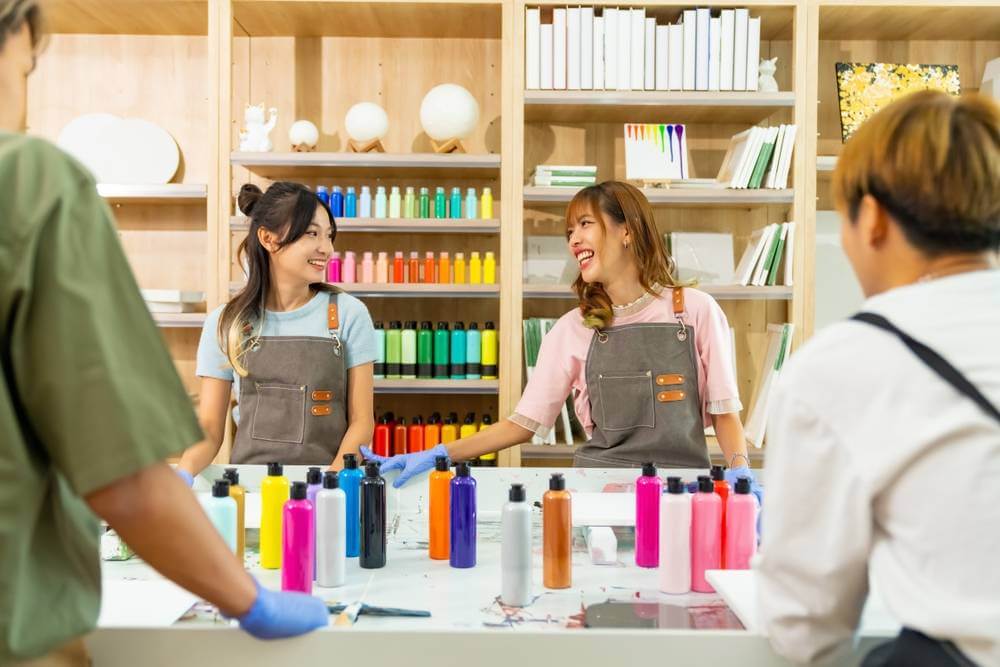
Think craft nights in student kitchens. Group pottery sessions in university studios. Friends gathering to make friendship bracelets while catching up properly with no phones in sight.
“It started as a joke,” says Emma, a second-year Psychology student at the University of Manchester. “My flatmate bought a massive bedazzling kit during exam stress, and suddenly we were all there at midnight, decorating everything we owned. But it was the first time in months we’d actually talked without checking our phones.”
The Psychology Behind the Hobby Revival
But why now? Why are students who grew up with infinite entertainment choosing to spend hours on activities their grandparents might recognise?
The answer lies in what psychologists call “restoration theory.” After years of constant stimulation, young minds are craving activities that feel genuinely restorative.
Dr James Mitchell, a digital wellness researcher at Oxford University, explains: “We’re seeing what I call ‘stimulation fatigue.’ Students have reached a saturation point with high-intensity digital experiences. Hobbies offer something completely different; they’re meditative, tactile, and importantly, they exist in real time.
The science backs this up. A 2025 study published in the Journal of Digital Wellness found that students who engaged in “analogue hobbies” for just 30 minutes daily showed significant improvements in sleep quality, focus, and relationship satisfaction.
But there’s something deeper happening here. These aren’t just individual wellness choices, though; they’re reshaping how students connect.
How Slow Living Is Transforming Gen Z Relationship Dynamics
Remember when every student relationship felt like performance art? The carefully curated Instagram stories, the soft launch dating aesthetic, the pressure to document every coffee date?
That’s changing.
“Private relationships Gen Z style used to mean elaborate social media strategies,” notes relationship researcher Dr Priya Patel from LSE. “Now it’s about actually being private and creating genuine intimacy through shared activities that don’t translate to content.”
Take craft nights, for example. They’re becoming the new student house party. But instead of getting messy and forgetting everything, people are creating things together. Building memories that exist beyond phone cameras.
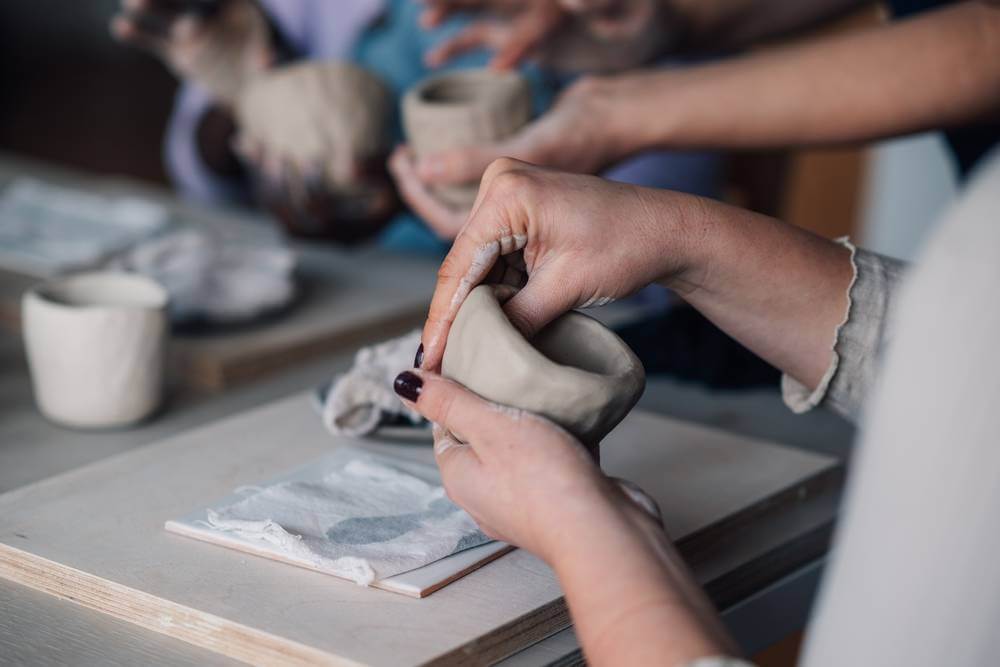
“My boyfriend and I started doing pottery together,” shares Zara, a third-year English student at the University of Edinburgh. “It sounds cheesy, but there’s something about working with your hands while talking that makes conversations deeper. Plus, we have these wonky mugs now that remind us of specific conversations we had while making them.”
This shift is particularly visible in how students approach the Gen Z relationship trend of “soft launching.” Instead of mysterious glimpses designed for social media engagement, couples are choosing activities that naturally exist offline.
Two people are knitting together on a sofa. Collaborative scrapbooking sessions. Partner pottery classes. These activities create intimacy without the pressure of documentation.
The Social Revolution: From Individual Hobbies to Community Building
This trend is pure gold for building genuine connections
What makes this movement particularly interesting is how it’s creating new forms of student community. Traditional socialising often revolves around drinking, clubbing, or group activities that can feel performative. Hobbies offer something different.
“Craft circles are becoming the new book clubs,” observes Dr Marcus Thompson, a digital anthropologist in Edinburgh. “Students are creating regular gatherings around making things together. It’s social, but it’s also productive in a way that feels meaningful.”
The evidence is everywhere. University societies are reporting increased interest in crafting groups, knitting circles, and “make and mend” workshops. Student unions are hosting “analogue evenings” where phones are banned, and craft supplies are provided.
“We started a weekly craft night in our student house,” explains Jake, a first-year Engineering student at the University of Bristol. “It began with three of us, but now we have people from other flats joining. There’s something about having your hands busy that makes it easier to have real conversations. Plus, everyone leaves with something sparkly.”
These gatherings are creating what sociologists call “productive socialising”, essentially time spent together that results in tangible outcomes while building relationships.
5 Ways to Start Your Own Slow Living Journey (Without Looking Like You’re Trying Too Hard)
Here’s your practical action plan.
1. Start Stupidly Small
Don’t buy a £200 pottery wheel. Grab a £3 colouring book from WHSmith. Spend 15 minutes before bed filling in patterns instead of scrolling. That’s it. Build from there.
2. Make It Social (But Not Performative)
Invite one friend over for a “craft and chat” session. Provide basic supplies such as coloured pens, paper, and maybe some beads. The goal isn’t to create masterpieces; it’s to have conversations while your hands are busy.
3. Use Your University Resources
Most universities have art studios, pottery wheels, or craft rooms that students can access. Check what’s available before buying anything. Many offer free “taster sessions” for different hobbies.
4. Embrace the Wonky
Your first attempts will look terrible. That’s the point. The goal isn’t Instagram-worthy results; it’s the process itself. Wonky pottery and lopsided friendship bracelets have more character anyway.
5. Create Phone-Free Zones
Designate specific times or spaces for hobby activities where phones aren’t allowed. This isn’t about being anti-technology; it’s about creating space for different types of engagement.
The Academic Benefits: Why Lecturers Are Noticing the Difference
The research behind why this actually works.
Here’s something unexpected: students embracing slow living hobbies are performing better academically.
Professor Lisa Rodriguez, who studies student well-being in Cambridge, has been tracking this phenomenon: “Students who engage in regular analogue hobbies show improved focus, better stress management, and enhanced creative problem-solving skills. The activities seem to function as a form of active meditation.”
The mechanism is fascinating. Repetitive, hands-on activities like knitting or drawing activate what neuroscientists call the “default mode network”, the brain’s rest state that’s crucial for processing information and forming memories.
“When students spend time on hobbies, they’re not just relaxing,” explains Dr Chen. “They’re giving their brains space to consolidate learning and make new connections. It’s like defragmenting a computer in the sense that everything works better afterwards.”
Students are noticing the difference, too. “I started cross-stitching during my dissertation year,” says Mia, a final-year History student in York. “Twenty minutes of stitching after study sessions helped me process what I’d learned. My supervisor even commented that my analysis became more nuanced.”
The Rebellion Against Hustle Culture
This is your permission to rebel against productivity obsession.
What makes this trend particularly radical is how it directly challenges hustle culture, the idea that every moment should be optimised for achievement.
“Gen Z students are rejecting the notion that hobbies need to be monetised or optimised,” notes Dr Thompson. “They’re choosing activities specifically because they’re ‘unproductive’ in traditional terms. It’s a form of resistance.
This rebellion is showing up in unexpected ways. Students are deliberately choosing hobbies that can’t be easily turned into side hustles. Pottery that’s too wonky to sell. Friendship bracelets made specifically for friends, not customers. Scrapbooks that exist purely for personal memory-keeping.
“I love that my knitting is terrible,” laughs Tom, a second-year Computer Science student at Imperial College. “In a world where everything gets judged and rated, having something that’s just mine, that I’m doing just for the joy of doing it feels revolutionary.”
The movement is also reclaiming time itself. Instead of filling every spare moment with productivity, students are choosing to spend hours on activities that have no measurable outcome beyond personal satisfaction.
The Global Impact: How UK Students Are Leading a Worldwide Shift
This isn’t just a British phenomenon. Students in Manchester are sharing the same craft night experiences as their counterparts in Melbourne, Mumbai, and Montreal. Social media is helping spread anti-digital activities worldwide.
“We’re seeing a global rejection of hyper-productivity among young people,” explains consumer behaviour expert Dr Rodriguez. “UK students are particularly influential in this movement because of how they’re combining individual wellness with community building.”
The trend is influencing industries too. Craft supply companies report massive increases in sales to 18-25 year olds. Universities are expanding their creative facilities. Even dating apps are adding “hobby interests” as matching criteria.
“Students are demanding different types of experiences,” notes Dr Patel. “They want activities that build genuine connection rather than just providing entertainment. This is reshaping everything from university programming to how brands approach young consumers.”
Potential Challenges: When Slow Living Becomes Another Performance
Every authentic movement faces the danger of becoming performative.
There’s already evidence of “aesthetic hobbying”; people choosing crafts based on how they look on social media rather than personal enjoyment. The rise of “cottagecore” and “dark academia” aesthetics shows how quickly genuine movements can become trends to perform.
“The challenge is maintaining the authentic spirit as the movement grows,” warns Dr Chen. “The moment hobbies become about creating the perfect craft room aesthetic or gaining followers, they lose their restorative power.”
Smart students are already aware of this paradox. They’re focusing on the feeling and benefits rather than the visual outcomes.
“I deliberately don’t photograph my pottery,” says Emma from Manchester. “The moment I start thinking about how it looks to others, it stops being relaxing. This is for me, not for content.”
The Future of Student Socialising
So, where does this leave student social life?
The slow living movement isn’t replacing traditional student activities; it’s expanding them. Students still go to clubs and societies, but they’re also creating new types of gatherings centred around making and creating.
“We’re seeing the emergence of ‘productive socialising,'” explains Dr Thompson. “Students want to spend time together in ways that feel meaningful and restorative. Hobbies provide that framework.”
This shift is particularly significant for international students, who often struggle with traditional British social activities. Craft nights and hobby groups offer more inclusive ways to connect.
“When I first arrived from India, pub culture felt really foreign,” shares Priya, a postgraduate student in Bath. “But joining the university’s embroidery circle gave me a way to meet people while doing something I actually enjoyed. Now some of my closest friends are people I met while stitching.”
Making It Work: Your Slow Living Starter Kit
Ready to try this yourself?
Start with curiosity, not commitment. Try different activities until something clicks. The goal isn’t to become an expert; it’s to find something that feels restorative.
Make it social gradually. Begin with solo activities, then invite others to join when you feel comfortable. The social aspect develops naturally when the activity itself is enjoyable.
Ignore the aesthetics. Focus on how activities make you feel rather than how they look. The most restorative hobbies are often the messiest ones.
Use university resources. Most institutions offer craft workshops, studio access, or hobby groups. Take advantage of what’s already available before investing in supplies.
Set boundaries. Decide which activities stay offline and stick to them. The power of hobbies lies partly in their separation from digital life.
The Bottom Line: Why This Movement Matters
The slow living hobby revival represents something bigger than craft trends or wellness fads. It’s a generation taking control of their time, attention, and relationships in an increasingly demanding world.
For students facing academic pressure, social media overwhelm, and uncertain futures, hobbies offer something precious: activities that exist purely for personal satisfaction and genuine connection.
“This isn’t about going backwards,” emphasises Dr Mitchell. “It’s about moving forward with intention. Students are choosing to engage with technology and productivity on their own terms, rather than being consumed by them.”
The movement is also creating new models for the student community. Instead of socialising that revolves around consumption, whether that’s alcohol, entertainment, or even content, students are building relationships around creation and shared learning.
Your Instagram soft launch doesn’t need to be a strategic mystery. Your relationships don’t need to be performed for an audience. Your free time doesn’t need to be optimised for productivity.
Sometimes the most radical thing you can do is spend an evening making something imperfect with people you care about.
